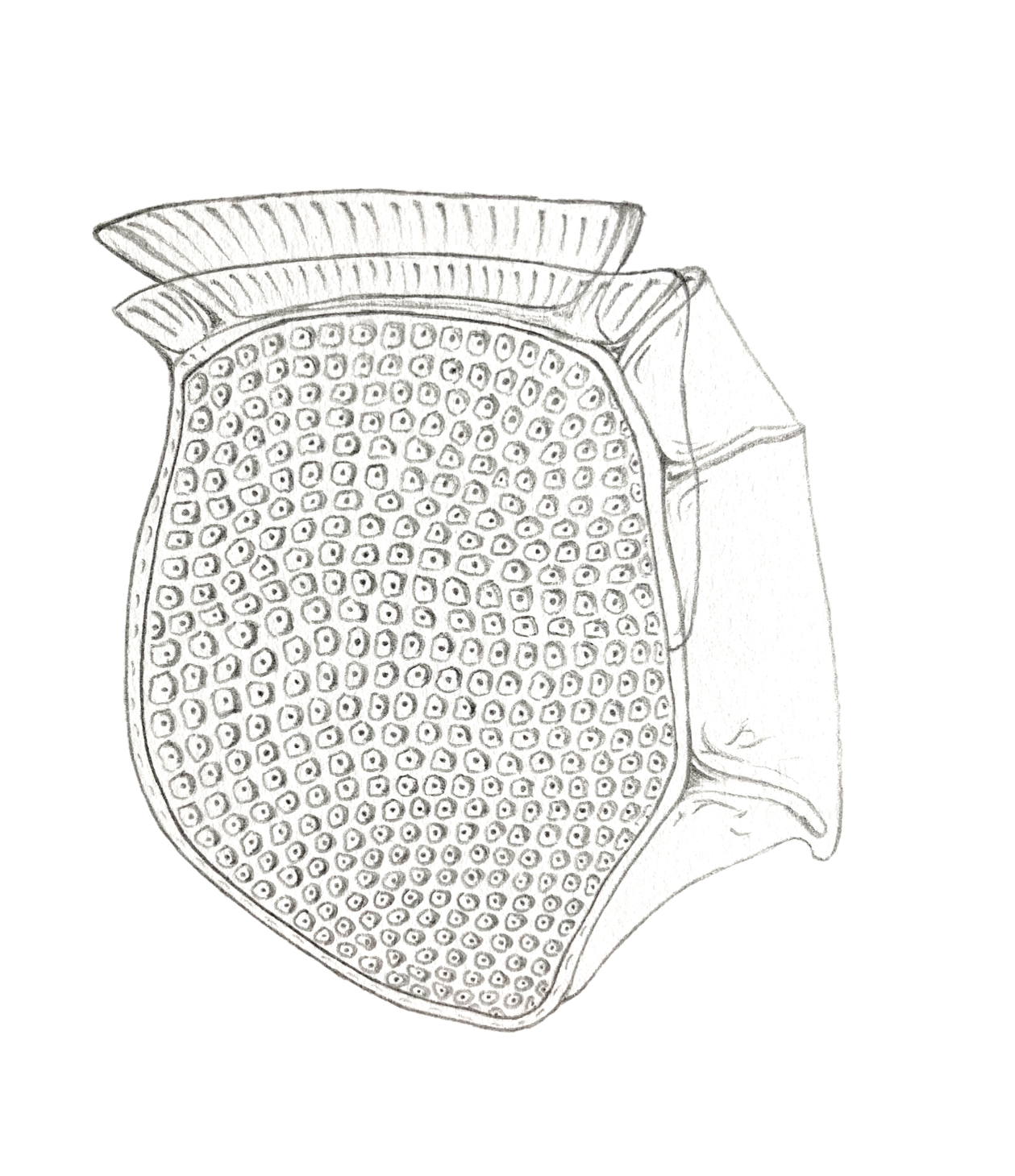
In these winter times, it is tempting to spend the evening sitting by the fire, reading old fairy tales. You’ve probably heard of Hansel and Gretel, a story of 2 children being lured into a gingerbread house by a cannibalistic witch?1
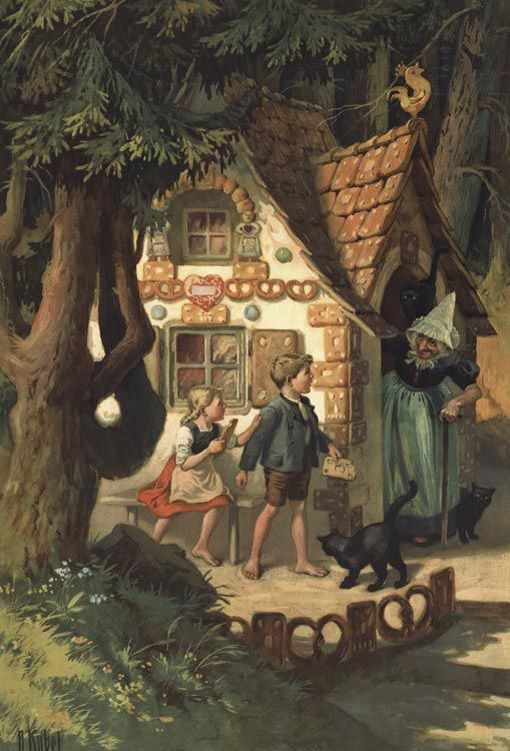
Well, today’s the day for some planktonic Hansel and Gretel.
Meet the witch: Orbulina universa
Our main protagonist is a single-celled organism belonging to a well-known family of Rhizarian protists: the Foraminifera (forams, for connoisseurs). Foraminifers come in a variety of shapes and colors, are found in the plankton and in the benthos, and are studied in many disciplines, from biology to paleoclimatology.
Orbulina universa is a planktonic foraminifer, living in symbiosis with the photosynthetic dinoflagellate Gymnodinium béii. The symbionts are hosted within a crown of pseudopods, hair-like thin extensions of the foram’s cell membrane. The darker host cell surrounded by the bright, minute symbionts somewhat resembles a beautiful supernova, hence its name (probably):
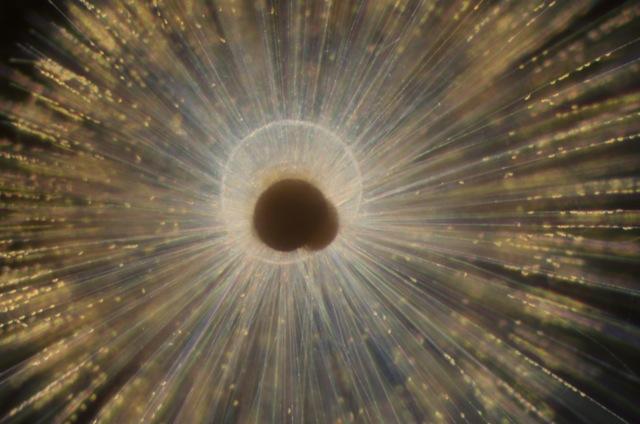
The foram leads its symbionts through a daily transhumance. During the day the symbionts are exposed on the outer skirts of the crown and photosynthesise, and at dusk they are brought back into intracellular chambers to spend the night within the host. Thus the association is thought to be mutualistic: the dinoflagellates are offered shelter from the cruel outside world while Orbulina gets carbon molecules from the photosynthesis of its symbionts, and possibly eats one or two once in a while.
This well-organised system seems to be particularly efficient, and in fact even in a situation of overproduction. By analysing the balance between photosynthesis and respiration, Fabien Lombard and his colleagues observed that the photosynthetic production of the symbionts far exceeds the carbon requirements of the system for its growth. Does all this good photosynthetic carbon go to waste then? Not really. Behind this apparently peaceful farming lifestyle, something more sinister might be lurking…
The good smell of sugar
The excess production of the symbionts is secreted outside of the cells, in the form of polysaccharides (i.e. sugars) and amino acids. In the ocean as in a dark medieval forest, the smell of sugar is a powerful attractant. For planktonic organisms who rely on chemical clues to decide which direction to go, following a trail of sugars and amino acids is generally the promise of a good meal in the form of juicy microalgae. That is probably what copepods think of when they arrive in sight of Orbulina universa and its sweet symbionts…
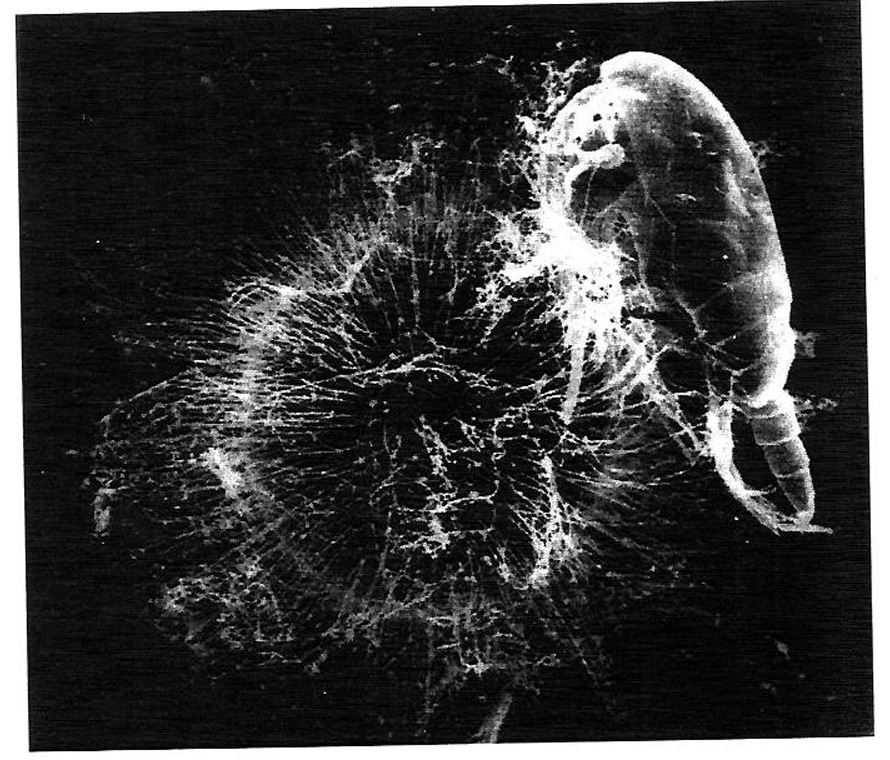
But then they get trapped in the sticky pseudopods of the foram. Unable to get away, they are slowly drawn near the cytoplasm of Orbulina, who digests the soft tissues, leaving nothing but an empty husk.
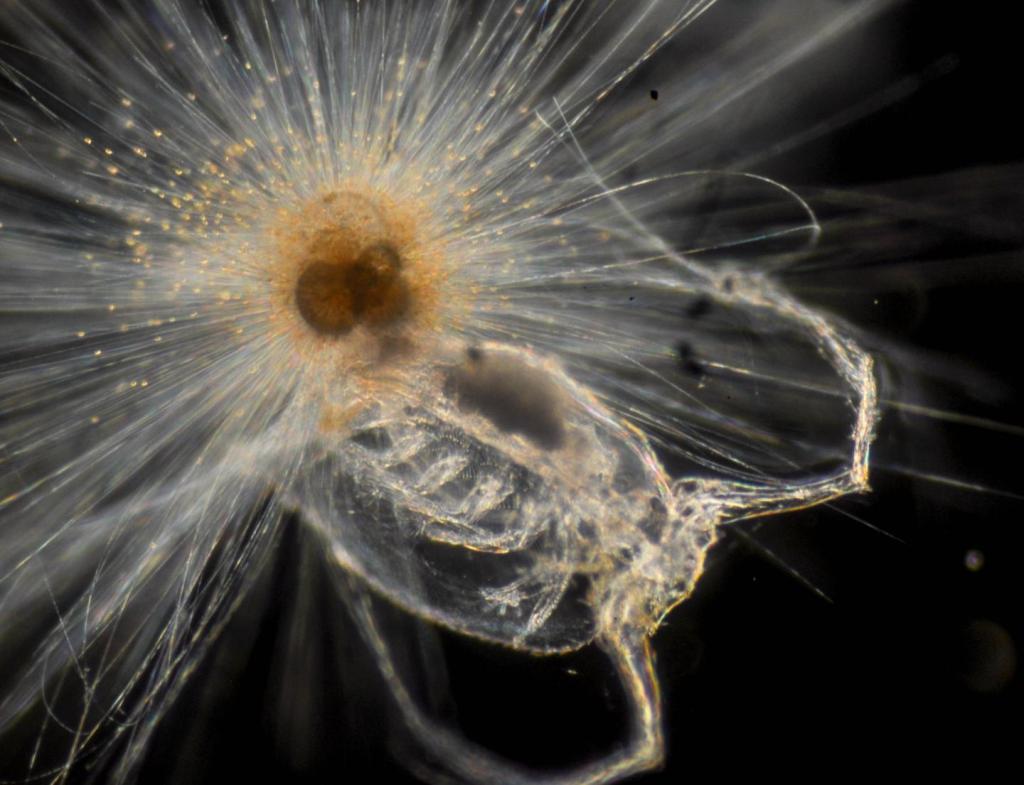
Like the gingerbread house of the witch, the sugar-secreting symbionts of Orbulina universa might in reality be an elaborate way to attract clueless, nutritious prey.
This is quite a compelling story isn’t it? However, we’re not sure it’s how it happens in reality. We know for sure that Orbulina preys on zooplankton, but are they attracted by the exudates of the symbionts? Some clues point towards this direction: O. universa cells in the wild are often found with copepods trapped in their pseudopods, in proportions apparently exceeding what would be expected if the encounters occurred by chance. We can therefore think that the foram attracts its prey through some mechanism, and the photosynthetic excess products are a good candidate. But we have no hard data or direct observation that proves it.
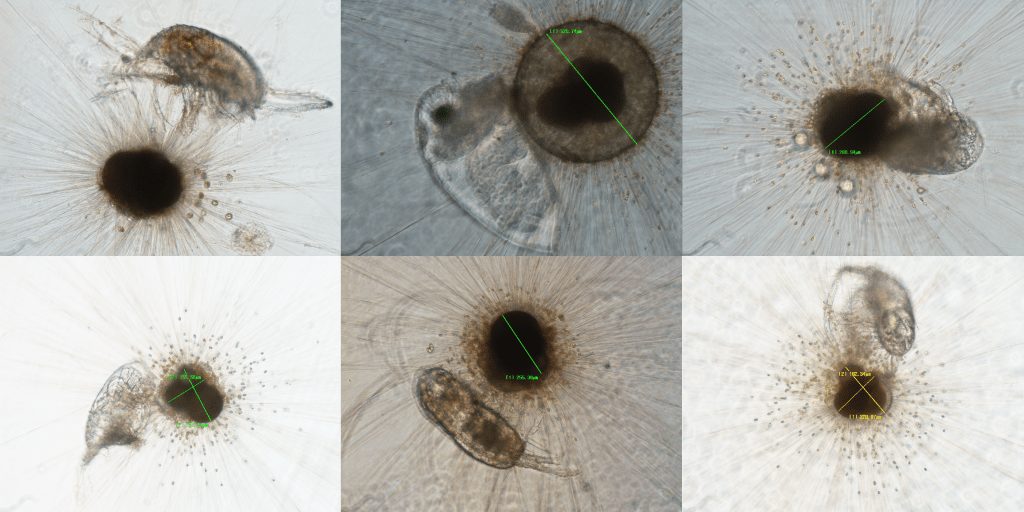
So the hypothesis of the “gingerbread house strategy” is out here, ready to be tested! Maybe it works exactly as we think? Maybe it doesn’t? Maybe there’s a Gretel-copepod that turns the strategy against the Orbulina-witch? In any case, there is something to learn here. Marine biologists and plankton enthusiasts of the world, go and experiment!
Many thanks to Fabien Lombard for introducing me to this story/hypothesis in his lecture on phytoplankton-zooplankton interactions some years ago, and for answering my questions and allowing me to use his photos for this blog post.
Here are the papers I read regarding symbiont-bearing foraminifera and predation:
Spero, Howard J. “Symbiosis in the Planktonic Foraminifer, Orbulina universa, and the isolation of its symbiotic dinoflagellate, Gymnodinium béii Sp. Nov.” Journal of Phycology 23 (1987): 307-317.
Culver, Stephen J., and Jere H. Lipps. “Predation on and by Foraminifera.” Predator—Prey Interactions in the Fossil Record. Boston, MA: Springer US, 2003. 7-32.
Lombard, F., et al. “Temperature effect on respiration and photosynthesis of the symbiont‐bearing planktonic foraminifera Globigerinoides ruber, Orbulina universa, and Globigerinella siphonifera.” Limnology and Oceanography 54.1 (2009): 210-218.
This blog post is under a CC BY 4.0 license and can be reused as long as the author and original sources are properly cited. Credit for all images is indicated in the legend.
- For the few who may not remember the story, the children end up fine: Gretel saves the day by locking the witch inside her own oven and letting her burn alive. Gruesome stuff, as often with german folk tales. ↩︎
 Phycoplankton
Leave a comment