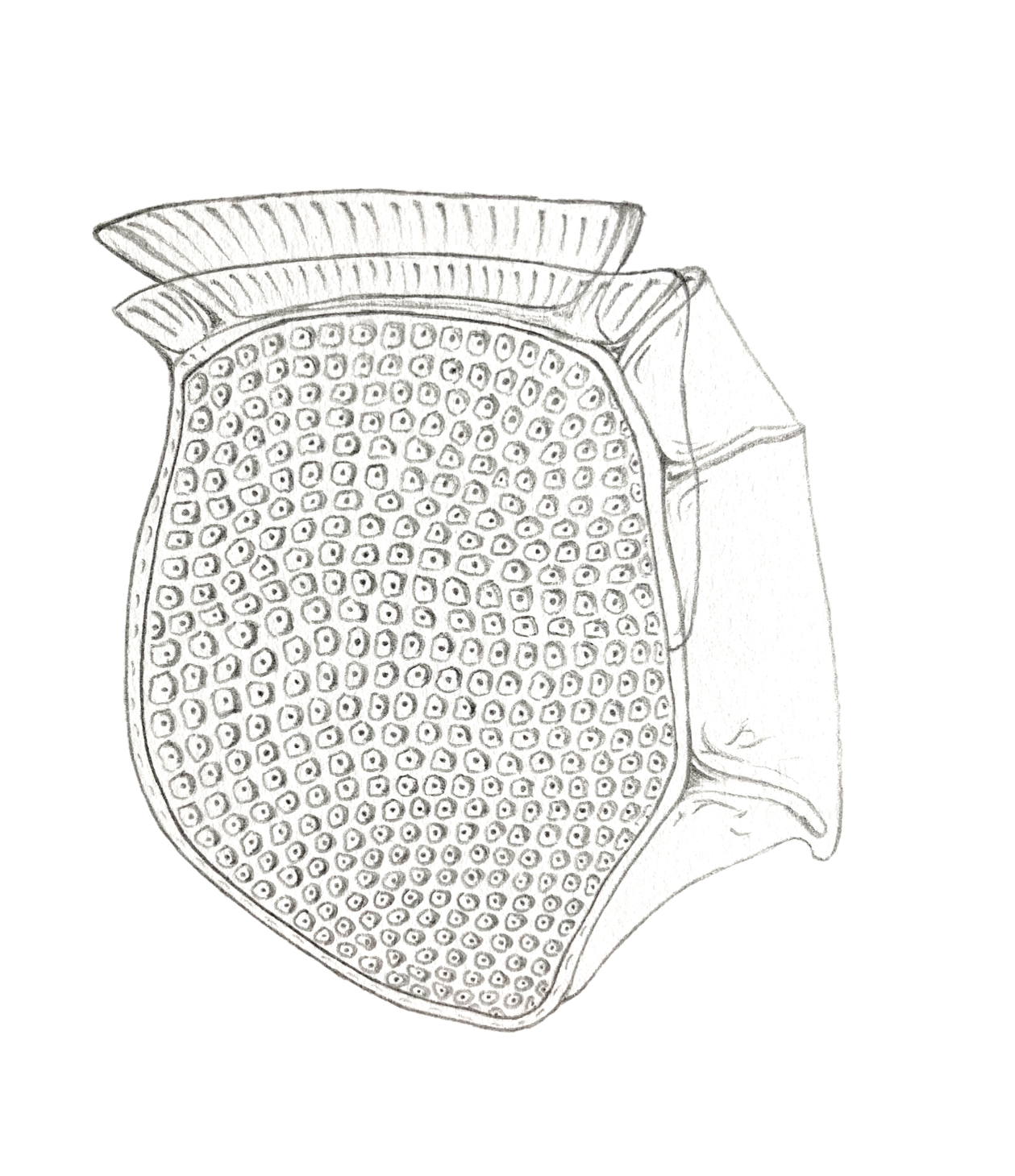
Where we explore the relatively young history of a fundamental divide in the tree of Life.
A deliberately short history of systematics
Systematics is the science of classifying life forms.
As with almost anything in science, the first traceable attempts at classifying life date back to Aristotle. In his treaty The History of Animals (4th century B.C.), the greek philosopher groups organisms based on morphological and/or behavioral similarities. He notably divides them between “animals” and “vegetables”.
But it’s really Linnaeus‘ Systema naturae (first published in 1735) that established the discipline. Linnaeus’ idea with this book was to propose a neat process to fit all organisms into a series of tidy little boxes, that would make it much easier for scholars to navigate the exuberant diversity of life. As he himself puts it:
“A natural system shall have no more than five subdivisions. These are:
Class, Order, Genus, Species, Variety
[…]
Legions, Regiments, Batallions, companies, soldiers
For unless we thus organise the whole, and as an army ready for battle, disorder shall arise and we will encounter only trouble and confusion.”
Extract from Système de la nature, de Charles de Linné, traduction en français par Mr. Vanderstegen de Putte (1793), English translation mine.
Accessed on Gallica (BNF)
To get his army in marching order, Linnaeus introduced the concept of binomial nomenclature, a convention that has proved indispensible to biologists up to the present day. The binomial nomenclature is a system in which any living species is precisely designated by 2 latin words : a genus name followed by a species name. That is how biologists speaking different languages will study la talpa, the northern mole, el topo común, la taupe européenne or der Europäische Maulwurf, but once they meet up in a congress to discuss their favourite animal, they will all speak about Talpa europaea.
Linnaeus was a staunch fixist. He designed his system as an inventory of the marvels that God put on this Earth, since the Genesis and for eternity1. The structure of the system was here to stay, but roughly a hundred years later, its meaning would change drastically.
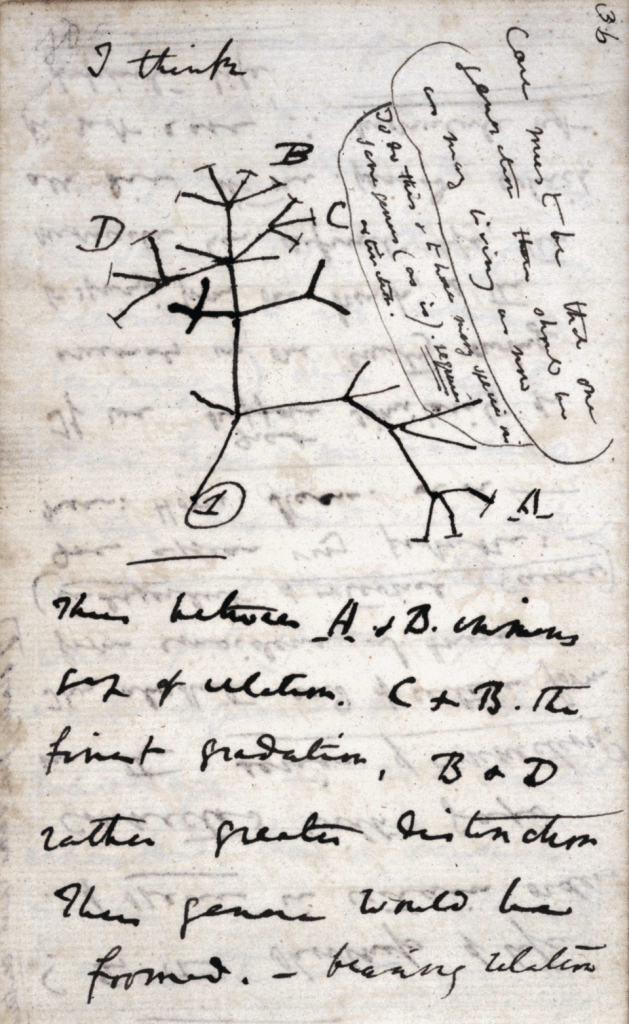
In the second half of the XIXth century, the Darwinian revolution took biology by storm. According to the Darwinian theory of evolution, characteristics shared by different species testify to a common origin of these species. Linnaeus’ boxes were now interpreted as families of more or less distantly related cousins. Systematics became the science of classifying life forms based on their degree of relatedness, a purpose it maintains to this day2. It is at this period that the representation of the “tree of life”, figuring the common origins of different living beings, took root.
The rise of Darwinism coincided broadly with the development of marine microbiology, ambitious oceanographic expeditions, and what would become planktology. Ernst Haeckel, one of the most important figures in European biology at the time and a fervent supporter of Darwinism, included microbes (“Protista”) in his representation of the tree of life in his influential Generelle Morphologie der Organismen in 1866:
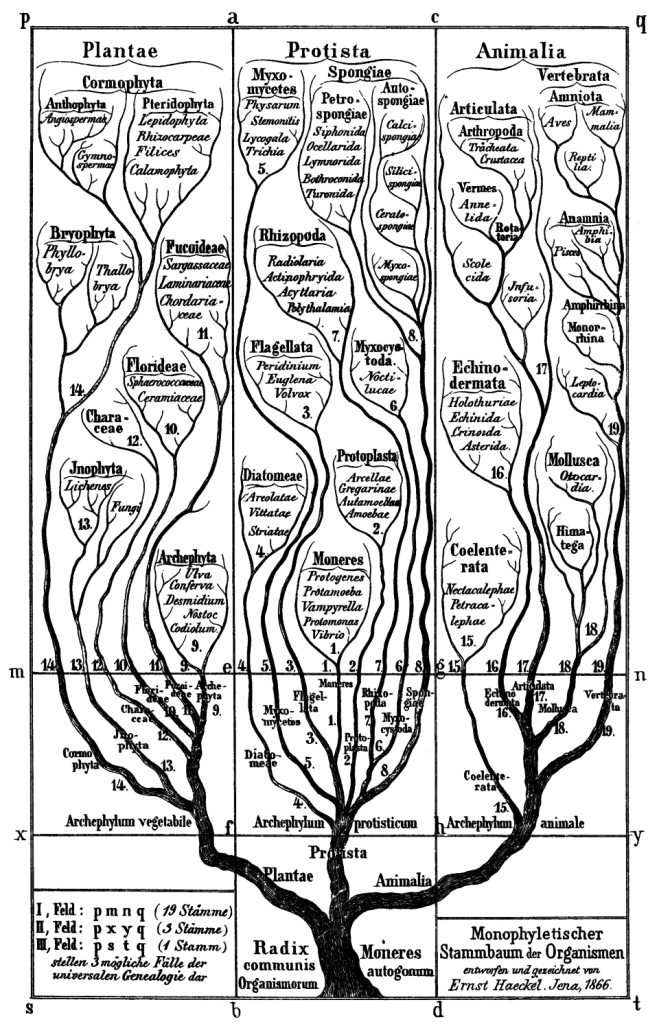
There were the microbes, firmly anchored as the middle branch of the tree of life.
Splitting Protista
In 1925, French biologist and protistologist Edouard Chatton published an article with the complicated name “Pansporella perplexa : amœbien à spores protégées parasite des daphnies. Réflexions sur la biologie et la phylogénie des protozoaires.”3, in the french scientific journal Annales des Sciences Naturelles : Zoologie. Somewhere in this 81-page long (!) paper, Chatton represents a phylogenetic tree of protists in which he separates them in 2 branches: the “Procaryotes” and the “Eucaryotes”, with seemingly no further explanations4.
(In my humble opinion, for Chatton to introduce such a critical concept in such an unremarkable way is not unlike a chef demonstrating is new revolutionary recipe at a small village’s sausage fair.
Not sure about this comparison. I tried to come up with a better one but I didn’t find any. Hopefully you, my smart readers, get the point.)
In 1937, Chatton published a book titled: Titres et Travaux Scientifiques (1906-1937)5. During the 12 years since his 1925 paper, he probably figured that his concept of the “Procaryotes” and “Eucaryotes” deserved a more thorough explanation. That is why, presumably, he devoted 1 (one!) paragraph of his 407-page book to it. Here it is, in its entirety:
Protistologists agree today on considering autotrophic flagellates as the most primitive of the Protozoans with a true nucleus, the Eukaryotes (a group that also includes the Vegetals and the Metazoans), because they are the only ones capable of synthesising their entire protoplasm from the mineral medium. Heterotrophic organisms are thus contingent on their existence, as well as that of the chimiotrophic and autotrophic Prokaryotes (nitrifying and sulphurous bacteria, cyanobacteria).
Edouard Chatton, Titres et Travaux Scientifiques (1906-1937), Sète, 1937. Reproduced in French by Sam Savage in his 2004 article, English translation and emphasis mine.
And just like that, Chatton established the divide between eukaryotic and prokaryotic living cells, based on whether or not they host a “true nucleus”.
Still, the concept of Prokaryotes/Eukaryotes lingered in relative obscurity, probably due to Chatton’s tendency to mention it only in passing, and in papers or books with remarkably unremarkable titles. At the time of Chatton’s death in 1947, only a few papers in French, but also in German and English, had mentioned the dichotomy, citing Chatton (1925) as a source. It was still largely unknown in mainstream biology.
Fortunately for Chatton’s legacy, he was the mentor and friend of the genius biologist André Lwoff6. Lwoff regularly used his former professor’s classification in his own protistology papers. More importantly, he discussed it with colleagues. This may as well be the main takeaway from this post: discussions with colleagues are at least as important as papers (if not more).
In 1960-1961, Canadian biologist Roger Stanier took a sabbatical year from his professor position in UC Berkeley to stay at the Institut Pasteur in Paris for some time. There, in early 1961, he came to know of the terms “Procaryotes” and “Eucaryotes” during a discussion with Lwoff, as he recalls in his autobiography. On March 2nd 1961, Stanier gave a lecture before the French Society for Microbiology: “La place des bactéries dans le monde vivant”7. For the first time, he clearly layed out the principles behind the distinction between Prokaryotes and Eukaryotes. The passage I reproduce here is quite long, but I think it’s worth it:
In the last fifteen years, a whole new series of techniques has made possible a profound understanding of the biological structure at the intracellular level. One of the consequences of this cytological revolution has been the emergence of much more precise data on the fine structure of bacteria and blue algae [cyanobacteria]. These data confirm the previous intuitions: they show that the cells of inferior protists, bacteria and blue algae, are organised in a manner different than that we know of in superior protists, plants and animals. A specific designation has become essential for these two types of cells, and I will adopt the terminology proposed twenty years ago by Chatton (1937). The cell of the type that exists in bacteria and blue algae is a prokaryotic cell ; the cell of the type that exists in other organisms, is an eukaryotic cell.
[…]
In the eukaryotic cell, surrounded in its entirety by the cytoplasmic membrane, intracellular structures are found, truly functional sub-units, that are themselves surrounded by membranes. In the prokaryotic cell, there is only one delimiting membrane, the cytoplasmic membrane.
The most general expression of this difference in organisation concerns the nucleus ; in the prokaryotic cell, it is never separated from the cytoplasm by a nuclear membrane, whereas in the eukaryotic cell, a membrane always surrounds the nucleus at rest. Moreover, in the eukaryotic cell, the units for the respiratory and photosynthetic functions are always included in specific organelles bound by membranes ; these are the mitochondria and chloroplasts. Such organelles, bound by membranes, do not exist in the prokaryotic cell.
Roger Stanier, “La place des bactéries dans le monde vivant”, Annales de l’Institut Pasteur, volume 101 n°3, septembre 1961 (in French, English translation mine).
1961 was a time when the discovery of the DNA double-helix was less than ten years-old, and another decade would pass before RNA and DNA sequencing were developed. Therefore, and as the quoted passage shows, the distinction between prokaryotic and eukaryotic cells was based on structural cytological observations. But when the first molecular phylogeny of the tree of life was proposed by Woese and Fox in 1977, it showed that the Eukaryotes and Prokaryotes were, indeed, separate domains of life. Or, more exactly, that Eukaryotes formed a monophyletic group, while Prokaryotes were a paraphyletic group comprising Bacteria (or Eubacteria) and Archaea, from which Eukaryotes likely evolved.
After is lecture, Stanier popularised the fundamental and practical dichotomy between the prokaryotic and the eukaryotic cell in his papers and books in English, and it is now widely accepted and used in biology.
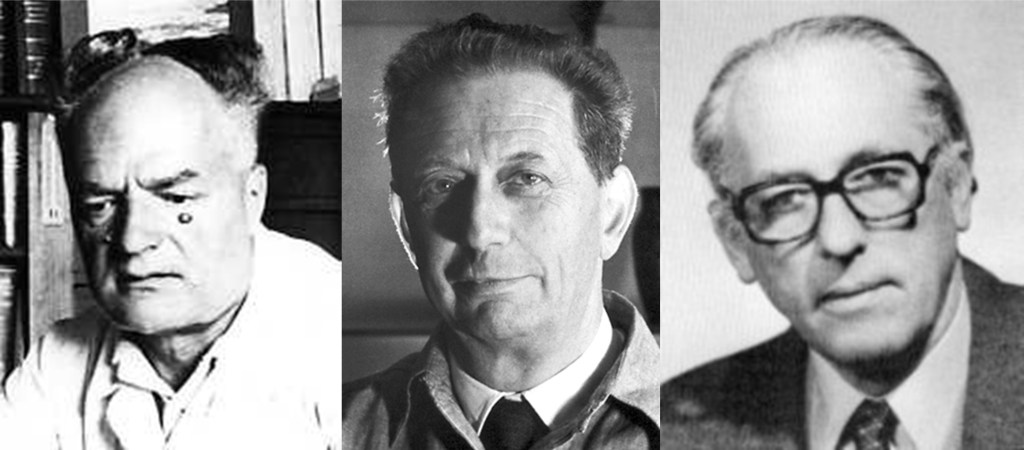
For protists (and protistologists), the whole story had major consequences. Bacteria are no longer considered protists, and Protista is no longer considered one of the kingdoms of life, as phylogenetic studies revealed that protists form a vastly diverse polyphyletic group of microbial eukaryotes! Still, protistology is alive and well, and protists are still studied in many of the places where Chatton, Lwoff and Stanier once discussed their nature.
I first discovered the fascinating history of the Prokaryote/Eukaryote dichotomy last summer, while I was preparing a series of lectures on the phylogeny of algae for Bachelor’s students. I was surprised at how recent the formalization of the concept was! For this blog post, I am much indebted to Sam Savage for his 2004 article “The History of the Terms Prokaryotes and Eukaryotes” on the website RedOrbit.com, although I think (but am not sure) that it was originally published in a journal.
In order to tell a more concise and coherent story, I skimmed over the period between Chatton’s introduction of the concept in 1925 and Stanier’s formal definition of it in 1961. The reality is a bit more complicated, as you will see if you read Sam Savage’s article (which you should, it’s a great article), but I believe this post gives a fair account of the whole thing nonetheless.
Fun note: “Procaryote” and “Eucaryote”, in French, are spelled with a “c” instead of a “k”. Hence the back-and-forth between the two orthographs in the text!
Media credits: Darwin’s tree and Haeckel’s tree of life are in the public domain, I took the images from Wikimedia Commons. The photos of Chatton, Lwoff and Stanier are from Wikimedia Commons and are covered under fair-use (imho). The photo of Banyuls-sur-Mer is by me (V. Pochic) and, as all the text in this blog post (except citations), is under a CC BY 4.0 licence.
- He makes this abundantly clear in the first pages of the Systema naturae, with much praise for God’s great work. ↩︎
- In that aspect, systematics are intimately intertwined with phylogenetics. ↩︎
- “Pansporella perplexa: amoebian with protected spores, parasite of daphnias. Thoughts on the biology and phylogeny of protozoans.” ↩︎
- All I know about this olde paper comes from a very interesting article by Sam Savage from 2004. I tried to see if I could read it myself, and for that I went to my university’s library. Fortunately, they apparently have a physical copy. Unfortunately, the archives for the Annales des Sciences Naturelles : Zoologie are stored in a room that recently got infested with fungi, and all the documents in this room are no longer accessible. ↩︎
- Titles and Scientific Works (1906-1937). ↩︎
- Of “The concept of Virus” and Nobel prize fame. ↩︎
- “The place of bacteria in the Living World”. You can access the lecture in its entirety thanks to the numeric copy of the Annales de l’Institut Pasteur on Gallica. The big advantage of numeric copies over physical ones is that they are immune to fungus. ↩︎
 Phycoplankton
Leave a comment